
The BMW 1 Series is a compact luxury car made by BMW. It first arrived in 2004. The model has changed a lot over the years. Each generation brought new designs, engines, and technology.
The BMW 1 Series has built a strong name among small premium cars. It offers a sporty feel with everyday comfort. Its journey also shows how BMW changed its approach to compact cars. Each generation has something different to offer.
In this guide, we will explore all BMW 1 Series generations. We will look at their designs, engines, features, and performance. We will also see the key changes from one generation to the next.
BMW 1 Series E81
The BMW 1 Series E81 was the three-door hatchback version of the first-generation 1 Series. BMW introduced the first 1 Series in 2004, with the E81 joining the range as the three-door model in 2007. It kept BMW’s rear-wheel-drive layout, which was unusual among compact hatchbacks at the time.
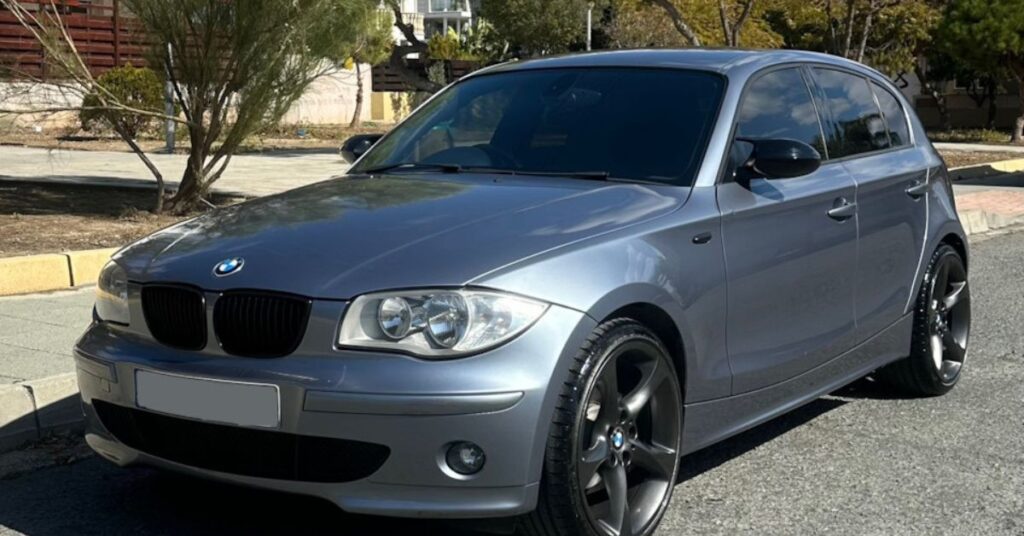
The E81 also stood out because BMW offered it with several engine choices. Buyers could choose from four-cylinder petrol and diesel engines, while higher-performance versions included the 130i with a 3.0-liter inline-six. The range also included the 123d, which used a twin-turbocharged 2.0-liter diesel engine and produced 204 hp.
Its compact size and rear-wheel-drive setup gave the E81 a distinctive driving character. The short body made it easy to handle in urban areas. At the same time, the balanced chassis gave it a sportier feel than many front-wheel-drive rivals. The E81 helped establish the 1 Series as BMW’s entry point into the premium compact market.
BMW 1 Series E87
The BMW 1 Series E87 was the five-door hatchback body style of the first-generation 1 Series. BMW launched it in 2004. It used rear-wheel drive and shared its basic engineering with the larger E90-generation 3 Series. This layout gave the E87 a different character from most compact hatchbacks of its time.
The E87 offered a wide range of engines during its life. Early versions included the 116i, 118i, 120i, 118d, and 120d. BMW later added the 130i with a 3.0-liter six-cylinder engine. The 130i produced about 265 hp, making it one of the most interesting performance versions in the range. BMW also introduced the 123d, which used a twin-turbocharged 2.0-liter diesel engine.
The E87 received updates during its production run. BMW introduced revised exterior details and newer engine technology as the model evolved. Its rear-wheel-drive layout, compact dimensions, and available six-cylinder engine made it unusual in the premium hatchback class. BMW eventually replaced the E87 five-door with the F20 1 Series in 2011.
BMW 1 Series E82
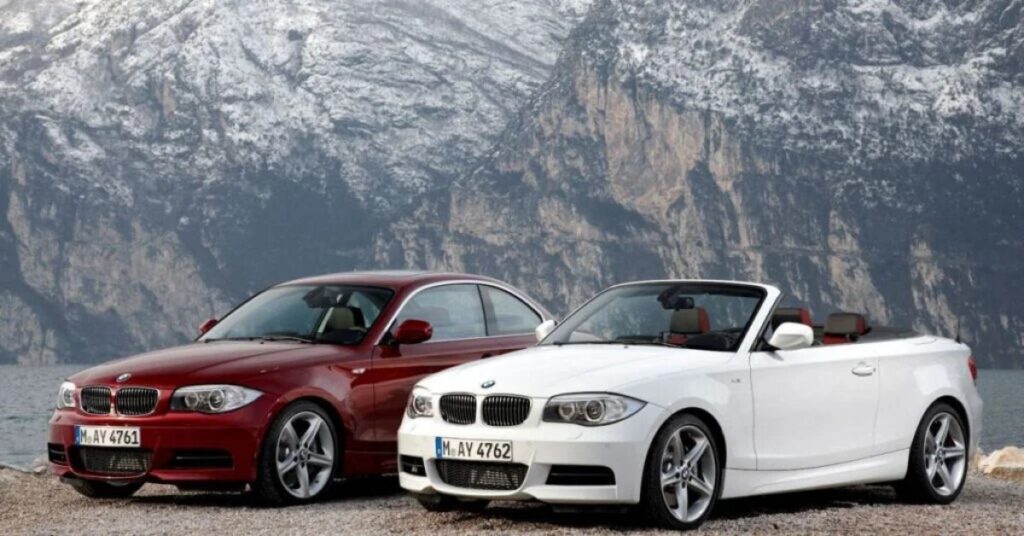
The BMW 1 Series E82 was the two-door coupe version of the first-generation 1 Series. BMW introduced it in 2007. It kept the rear-wheel-drive layout used by the other early 1 Series models. The coupe had a 2+2 seating layout and a separate trunk. BMW also gave it a more performance-focused design.
The E82 became especially popular because of its powerful six-cylinder engines. The 135i used a 3.0-liter turbocharged inline-six. Early cars used the N54 twin-turbo engine, producing 306 hp and 400 Nm. Later 135i models switched to the N55 engine. BMW also offered the 123d with a 2.0-liter twin-turbo diesel producing 204 hp.
The E82 also became the base for the limited-production BMW 1 Series M Coupe. This model used the N54 3.0-liter turbocharged six-cylinder engine and a six-speed manual transmission. The regular E82 range continued into the early 2010s, with the 135i and other versions receiving updated engines and equipment. Its compact size, rear-wheel drive, and strong engines made the E82 one of the most distinctive 1 Series generations.
BMW 1 Series E88
The BMW 1 Series E88 was the convertible version of the first-generation 1 Series. BMW introduced it in 2008 as the fourth body style in the original 1 Series family. It used a fabric soft top and kept the rear-wheel-drive layout. BMW designed it as a compact four-seat convertible with a strong focus on open-air driving.
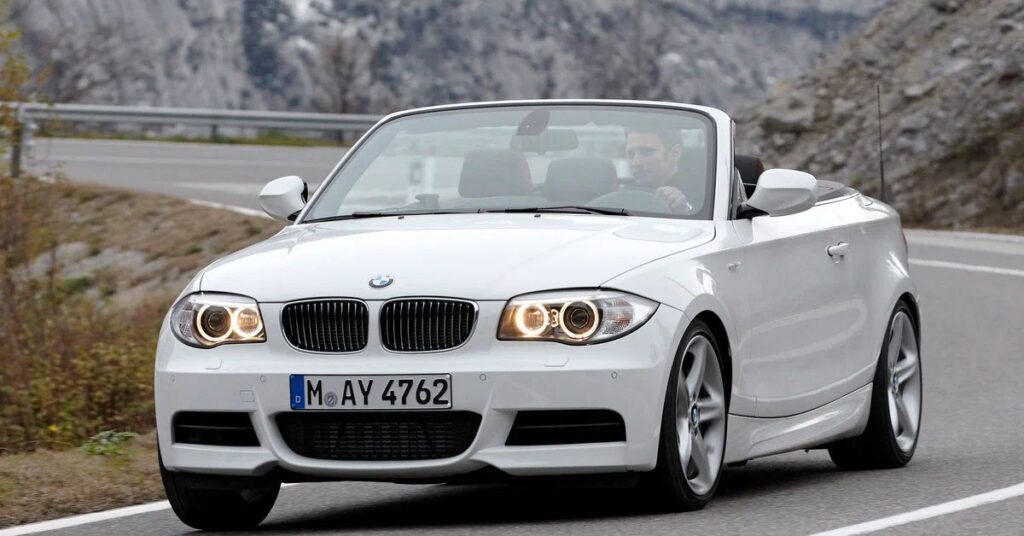
The E88 offered several engine choices. These included four-cylinder petrol and diesel engines, along with stronger six-cylinder options. The range-topping 135i Convertible used a 3.0-liter twin-turbocharged inline-six. It produced 306 hp and 400 Nm of torque. BMW quoted a 0–62 mph time of 5.4 seconds for this version.
The E88 had some useful convertible features for its time. Its electric soft top could open or close in about 22 seconds. It could also operate while the car was moving at speeds of up to 50 km/h. BMW built the E88 at its Leipzig plant, producing 131,664 units, according to BMW Group production records.
BMW 1 Series F20
The BMW 1 Series F20 is the five-door hatchback version of the second-generation 1 Series. BMW introduced it in 2011. It kept the rear-wheel-drive layout of the earlier E87. BMW also made the F20 longer and wider. Its wheelbase grew to 2,690 mm, which helped create more cabin space.
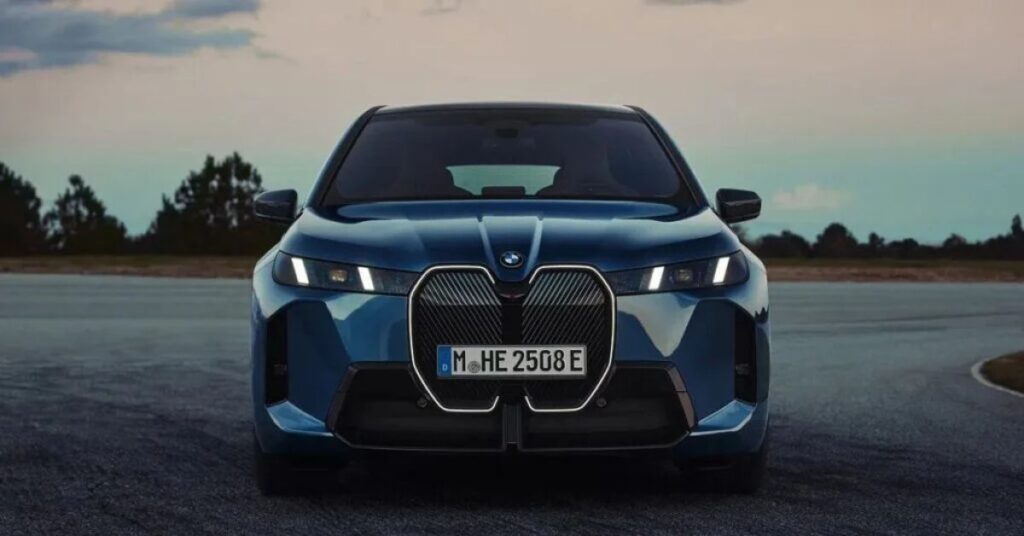
The F20 launched with engines such as the 116i, 118i, 116d, 118d, and 120d. The 118i produced 170 hp from its 1.6-liter turbocharged petrol engine. The 120d used a 2.0-liter diesel engine with 184 hp. BMW also offered an eight-speed automatic transmission, which was a notable feature in this class at the time.
The F20 later gained stronger versions, including the M135i. Its 3.0-liter turbocharged inline-six produced 235 kW, or 320 hp, in the early version. BMW also introduced xDrive on selected models. The F20 remained rear-wheel drive for most of its range until production ended in 2019.
BMW 1 Series F21
The BMW 1 Series F21 was the three-door hatchback version of the second-generation 1 Series. BMW introduced it in 2012, following the five-door F20. The F21 kept the rear-wheel-drive layout that made this generation unusual in the compact-car class. It shared its main engineering with the F20.
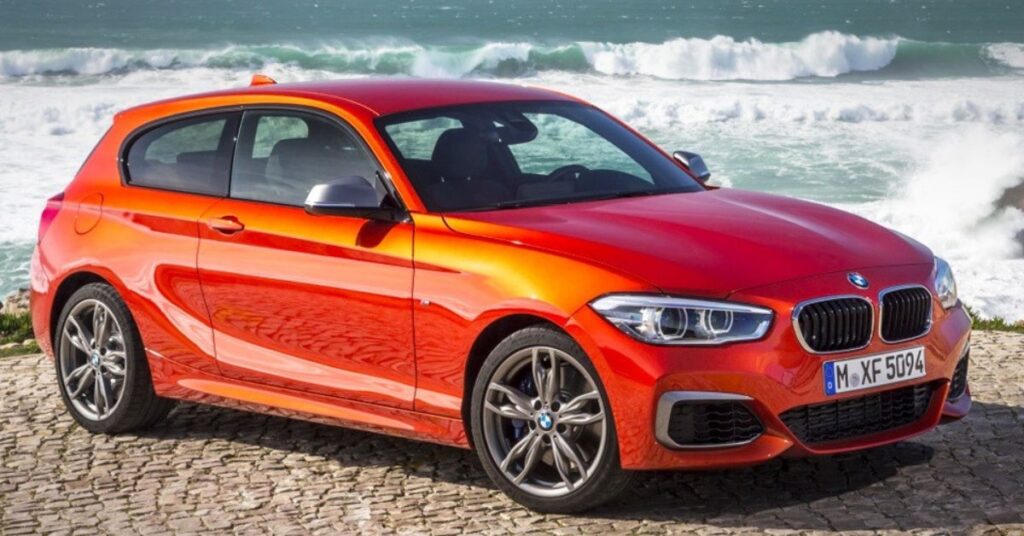
The F21 came with several petrol and diesel engines. The range included the 114i, 116i, 125i, 114d, 116d, 118d, and 125d. BMW also offered the M135i, which used a 3.0-liter turbocharged inline-six. Later, the M135i was replaced by the M140i, which received BMW’s B58 six-cylinder engine.
The F21 was produced from the early 2010s until 2019. It also received BMW’s facelift in 2015, bringing revised styling and updated engines. The high-performance M140i became one of the most notable versions, while selected models were available with xDrive all-wheel drive. The F21 was part of the last 1 Series generation to use rear-wheel drive before BMW moved the next-generation F40 to a front-wheel-drive platform.
BMW 1 Series F40
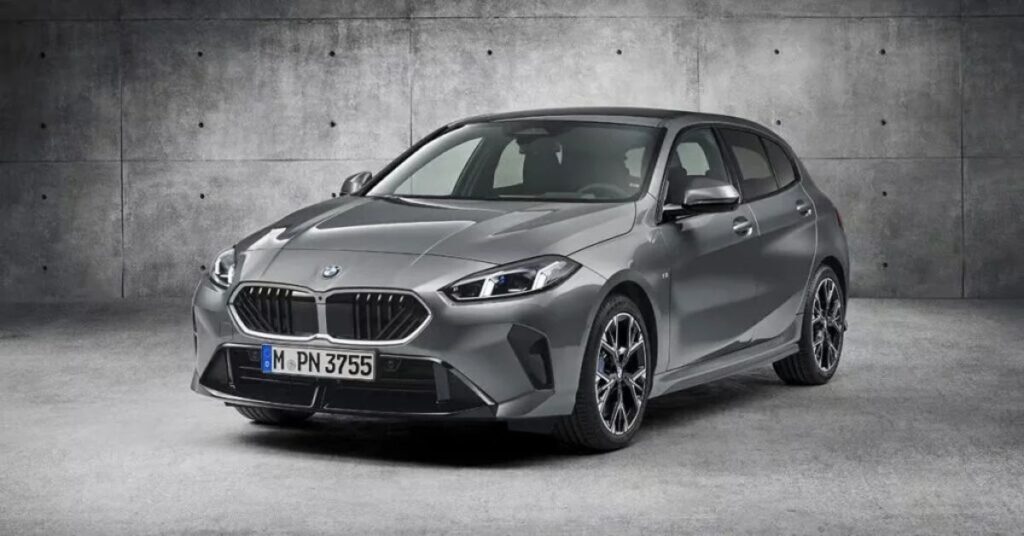
The BMW 1 Series F40 is the third-generation 1 Series. BMW introduced it in 2019. It brought the biggest mechanical change in the model’s history. BMW moved from rear-wheel drive to a front-wheel-drive architecture. The F40 was offered only as a five-door hatchback.
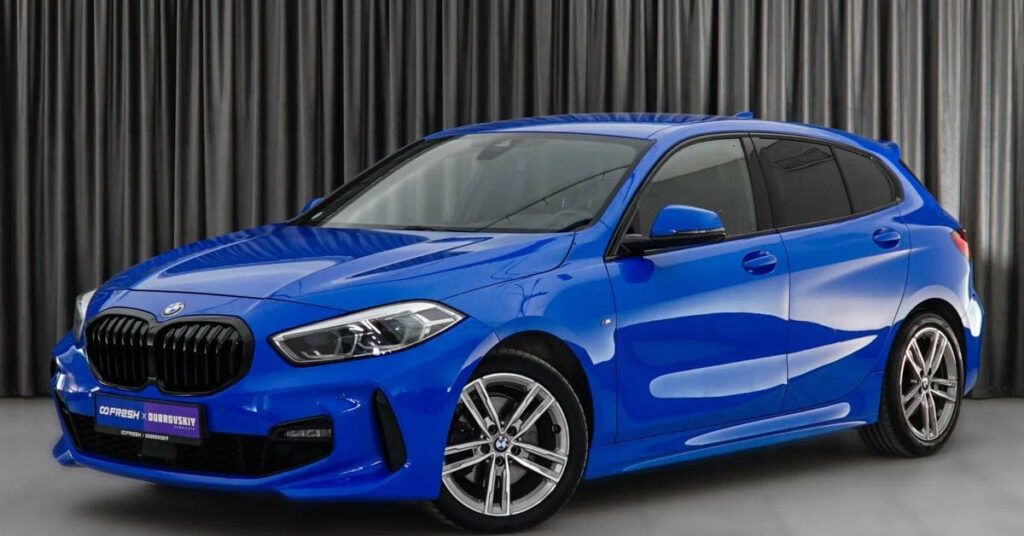
The F40 used smaller turbocharged engines and offered more cabin space. The 118i used a 1.5-liter three-cylinder engine with 140 hp and 220 Nm in some markets. The performance model was the M135i xDrive. It used a 2.0-liter turbocharged four-cylinder engine with 306 hp and 450 Nm. It could reach 100 km/h in 4.8 seconds.
BMW also focused heavily on technology and practicality with the F40. The luggage area offered 380 liters, increasing to 1,200 liters with the rear seats folded. Rear passengers gained more knee room and headroom than in the previous model. The F40 also introduced features such as BMW Live Cockpit, a Head-Up Display, and Reversing Assistant.
BMW 1 Series F70
The BMW 1 Series F70 is the fourth-generation 1 Series. BMW introduced it in 2024. It continues with a front-wheel-drive platform. The F70 also keeps the five-door hatchback body style. Its design brings a sharper front end and a more upright appearance.
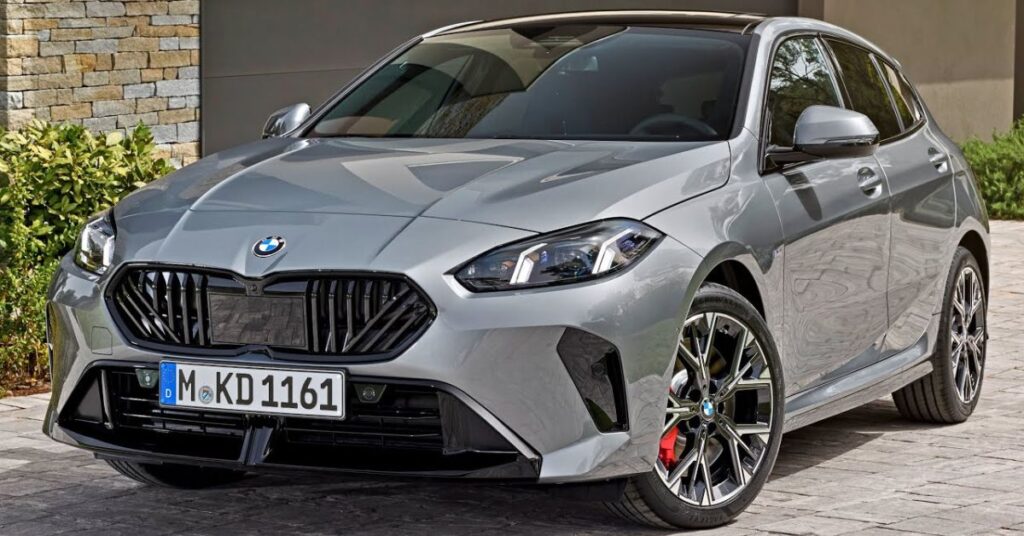
The F70 uses newer engines and mild-hybrid technology on selected models. The BMW 120 combines a 1.5-liter three-cylinder petrol engine with a 48-volt system. It produces 170 hp and 280 Nm. BMW quotes 0–100 km/h in 7.8 seconds. The range also includes the M135 xDrive, which produces 300 hp and 400 Nm from a 2.0-liter four-cylinder engine.
BMW also upgraded the F70’s cabin and technology. It uses a 10.25-inch information display and a 10.7-inch control display. Luggage space ranges from 300 to 1,135 liters in the BMW 120. The F70 also offers newer driver-assistance systems and digital features. These changes make the fourth-generation 1 Series more focused on technology, efficiency, and everyday practicality.
Conclusion
The BMW 1 Series has changed greatly since its launch in 2004. The early E81, E87, E82, and E88 models focused on rear-wheel-drive handling. The F20 and F21 continued that formula. The F40 then moved the 1 Series to a front-wheel-drive platform. The latest F70 builds on that approach with updated technology and powertrains.
Each generation brought its own character. Some models became popular for their engines and driving feel. Others focused more on space, technology, and everyday comfort. Looking at the BMW 1 Series generations shows how BMW adapted its smallest model while keeping it competitive in the premium compact class.
FAQs
1. How many BMW 1 Series generations are there?
There are four main generations: E8x, F20/F21, F40, and F70.
2. Which BMW 1 Series generation used rear-wheel drive?
The first and second generations used rear-wheel drive, while the F40 and F70 use a front-wheel-drive-based platform.
3. When did the BMW 1 Series F40 launch?
BMW introduced the F40 in 2019. It marked the major switch to front-wheel-drive architecture.
4. What is the latest BMW 1 Series generation?
The F70 is the latest generation. BMW introduced it in 2024 with updated technology and powertrains.
5. Which BMW 1 Series generation had the M140i?
The M140i belonged to the second generation, based on the F20/F21 platform. It used a 3.0-liter turbocharged six-cylinder engine.
Related Posts
BMW Z2 Roadster: Expected Performance and Styling
BMW Z2 Roadster: Expected Performance and Styling The BMW Z2…
BMW M5 Review: Performance, Interior & Technology
The BMW M5 is a high-performance luxury sedan built for…
BMW Alpina D3 Explained: Power, Luxury, and Performance
vBMW Alpina D3 Explained: Power, Luxury, and Performance The BMW…