
A BMW rally car is a modified BMW vehicle built for competitive rally racing. These cars handle rough roads, sharp corners, and changing weather conditions. They often feature powerful engines, upgraded suspension systems, stronger brakes, and lightweight parts. BMW has used several models in rally and other motorsport events.
What makes BMW rally cars special? Their combination of engine performance, balanced handling, and racing design makes them interesting to motorsport fans. Models like the BMW 2002 and E30 M3 have earned attention for their competition history. They also show how BMW engineering can adapt to demanding racing conditions.
This guide explores popular BMW rally car models and their development. It covers their engines, design, suspension, and performance features. You will also learn about rally modifications, racing achievements, maintenance, and buying considerations.
BMW Rally Car Models: A Complete Guide
A BMW rally car is a modified BMW vehicle built for competitive rally racing. These cars handle rough roads, sharp corners, and changing weather conditions. They often feature powerful engines, upgraded suspension systems, stronger brakes, and lightweight parts. BMW has used several models in rally and other motorsport events.
What makes BMW rally cars special? Their combination of engine performance, balanced handling, and racing design makes them interesting to motorsport fans. Models like the BMW 2002 and E30 M3 have earned attention for their competition history. They also show how BMW engineering can adapt to demanding racing conditions.
This guide explores popular BMW rally car models and their development. It covers their engines, design, suspension, and performance features. You will also learn about rally modifications, racing achievements, maintenance, and buying considerations.
BMW 2002 Rally Car
The BMW 2002 became one of the most recognizable classic BMW competition cars. It gained attention during the late 1960s and 1970s. Its compact body and rear-wheel-drive layout made it suitable for demanding rally stages. The car also offered responsive handling and a strong four-cylinder engine.
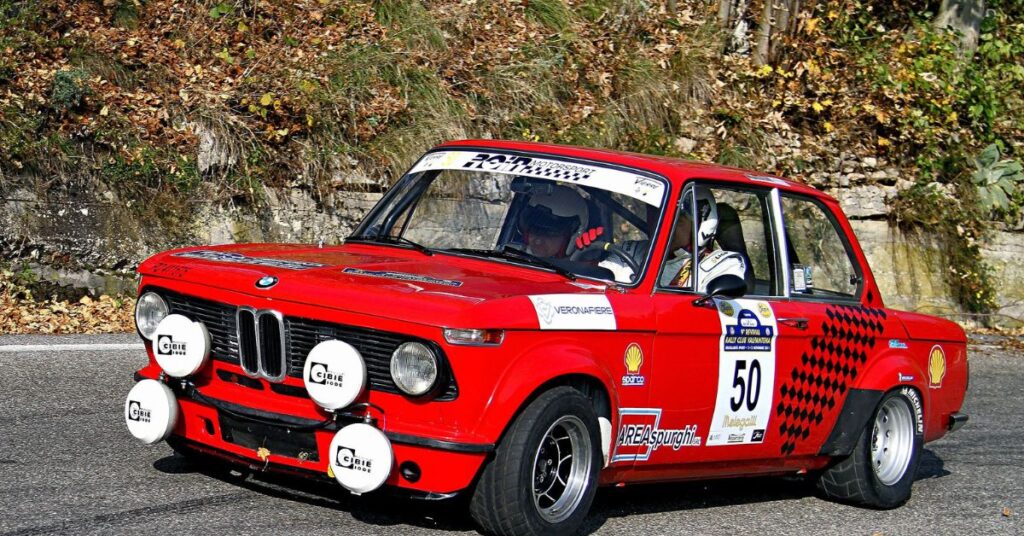
BMW offered the 2002 with a 2.0-liter four-cylinder engine. The 2002 tii used mechanical fuel injection and produced around 130 hp in road-going form. The 2002 Turbo added a turbocharger and delivered about 170 hp. Rally teams could modify these engines with suitable tuning, stronger components, and improved cooling.
The BMW 2002 also benefited from its simple mechanical design. Teams could upgrade its suspension, brakes, tires, and safety equipment for competition. Its lightweight body helped it handle tight corners and changing road surfaces. Today, the 2002 remains an important part of BMW’s motorsport history. Collectors and classic rally fans still value well-prepared examples.
BMW 3 Series Rally Cars
The BMW 3 Series has a strong connection with motorsport. Several generations have appeared in rally and other racing events. Its rear-wheel-drive layout, balanced chassis, and responsive engines made it a useful platform for competition. The E21 and E30 generations helped build the model’s reputation among racing fans.
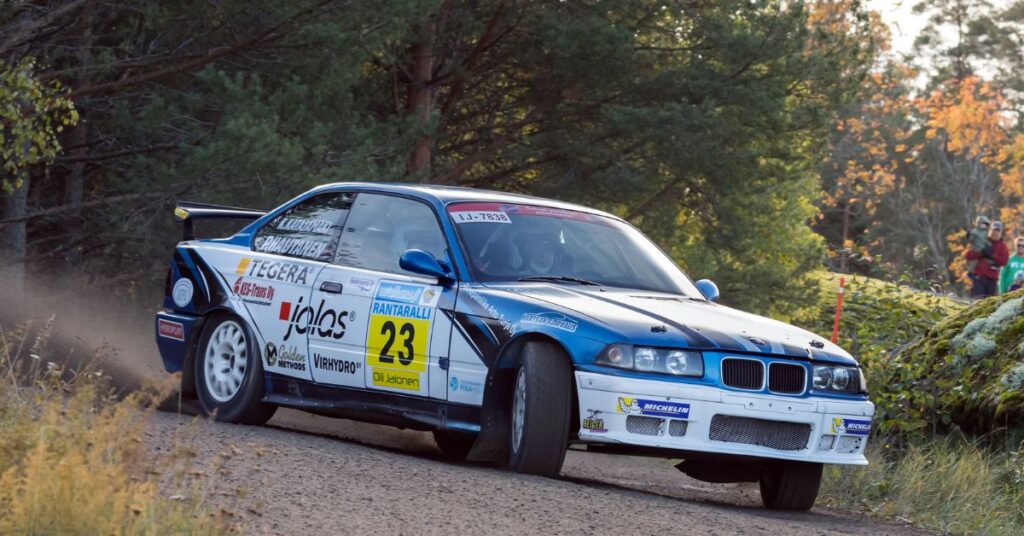
The BMW E30 3 Series became especially popular in motorsport. Its lightweight body and precise steering made it suitable for tight rally stages. The 325i featured a 2.5-liter six-cylinder engine. The E30 M3 used a high-revving 2.3-liter S14 four-cylinder engine in its original road version. Rally teams modified these cars with competition suspension, stronger brakes, and safety equipment.
BMW 3 Series rally cars also showed how road-going models could become capable competition machines. Teams adjusted engine power, gear ratios, and suspension settings for different surfaces. Gravel events required strong underbody protection and suitable tires. Tarmac stages needed precise handling and firm suspension setups. These features helped the 3 Series remain an important name in BMW’s motorsport history.
BMW M3 E30 Rally Car
The BMW M3 E30 is one of the most famous performance models in BMW history. BMW introduced it in 1986 as a road car for motorsport homologation. Its lightweight body, rear-wheel-drive system, and sharp handling made it a strong competition platform. The car also gained attention in rally and other racing events.
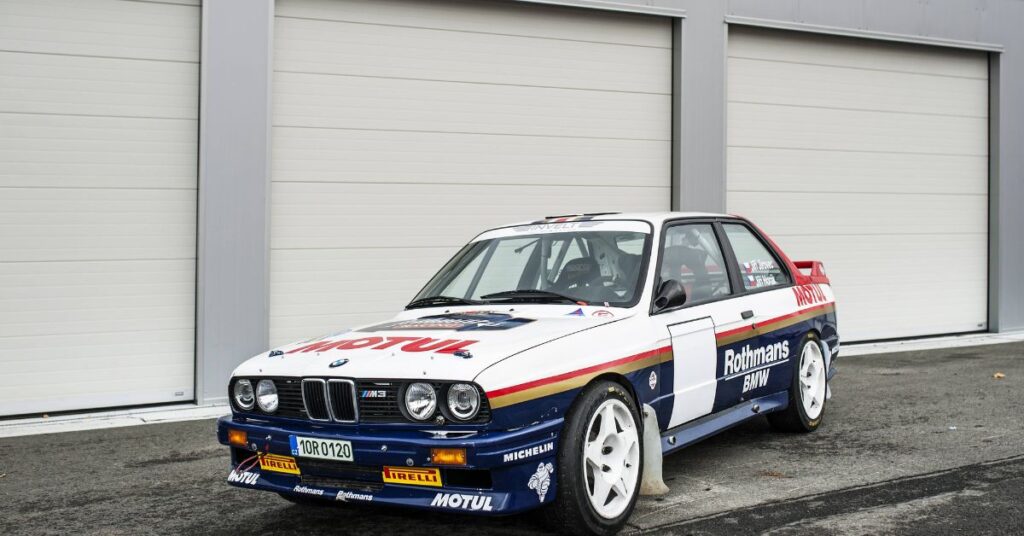
The original E30 M3 used a 2.3-liter S14 four-cylinder engine. It produced around 192 hp in its early European road version. Some later versions offered more power. The engine delivered quick throttle response and strong performance at high speeds. Rally teams could also adjust its suspension, gearbox, brakes, and engine settings for different stages.
The BMW M3 E30 became better known for its success in touring car racing, but it also appeared in rally competitions. Its balanced chassis helped drivers control the car on demanding roads. Teams added roll cages, racing seats, and protective parts for safety. Today, the E30 M3 remains a popular classic among BMW enthusiasts and motorsport collectors.
BMW Rally Car Engines
BMW rally cars have used different engines based on their models and competition needs. The BMW 2002 featured a four-cylinder engine that offered strong performance for its size. Later, the E30 M3 introduced the S14 2.3-liter four-cylinder engine. It delivered quick throttle response and performed well at high engine speeds. These engines helped BMW build a strong motorsport reputation.
Engine tuning played an important role in BMW rally car performance. Teams adjusted fuel delivery, ignition timing, and cooling systems to handle demanding stages. They also improved exhaust systems and internal engine parts when regulations allowed. Some competition builds used stronger pistons, upgraded camshafts, and modified engine management systems. These changes helped engines deliver more power and better reliability.
Different rally surfaces also placed different demands on engines. Gravel stages required smooth power delivery and reliable cooling. Tarmac stages often rewarded quick acceleration and strong engine response. Teams selected suitable gear ratios to match each route. Regular oil checks, filter changes, and engine inspections also helped prevent mechanical problems during competition.
Iconic BMW Rally Car Models
BMW has produced several cars that became popular in motorsport. Some models earned attention for their engine performance, lightweight design, and handling. The BMW 2002 helped establish the brand’s competitive image during the 1960s and 1970s. Later, the E30 M3 became a famous performance model with a strong racing background. Other 3 Series versions also appeared in rally events and private competition builds.
Some iconic BMW models stand out because of their engineering and motorsport history. Each offers different features for rally enthusiasts.
- BMW 2002: A classic model with a responsive four-cylinder engine and compact body.
- BMW 3 Series E21: An early 3 Series generation with a balanced rear-wheel-drive layout.
- BMW 325i E30: A popular model with a 2.5-liter inline-six engine.
- BMW M3 E30: A high-performance model with the S14 four-cylinder engine.
- BMW 323i E30: A six-cylinder version used in some private motorsport builds.
These models show how BMW’s road cars became platforms for competition and rally projects.
BMW Rally Cars vs. Competitors
BMW rally cars compete with models from brands like Audi, Ford, Subaru, and Mitsubishi. Each brand has its own approach to rally performance. BMW models such as the 2002 and E30 M3 are known for their rear-wheel-drive layouts and balanced handling. In comparison, many famous rally cars use front-wheel drive or all-wheel drive. These systems offer different levels of traction on gravel, snow, and wet roads. BMW has a strong motorsport history, but it does not have the same World Rally Championship record as some of its major rivals.
The main difference comes from engine design, drivetrain, weight, and handling. Audi became famous for its quattro all-wheel-drive system. Subaru and Mitsubishi built strong reputations with turbocharged all-wheel-drive rally cars. Ford also produced successful rally models across different generations. BMW offers a different driving experience through its rear-wheel-drive performance cars and competition engineering.
| Brand | Famous Rally Model | Engine | Drivetrain | Key Strength |
| BMW | BMW M3 E30 | 2.3L S14 petrol | Rear-wheel drive | Balanced handling |
| Audi | Audi Quattro | 2.1L turbocharged five-cylinder | All-wheel drive | Strong traction |
| Subaru | Impreza WRX STI | 2.0L or 2.5L turbocharged flat-four | All-wheel drive | Grip on loose surfaces |
| Mitsubishi | Lancer Evolution | 2.0L turbocharged four-cylinder | All-wheel drive | Acceleration and traction |
| Ford | Escort RS Cosworth | 2.0L turbocharged four-cylinder | All-wheel drive | Rally-focused performance |
| Lancia | Delta Integrale | 2.0L turbocharged four-cylinder | All-wheel drive | Championship success |
Note: Engine specifications vary by model year and competition version. These are representative examples, not specifications for every rally car.
BMW Rally Car Design
BMW rally car design focuses on strength, balance, and performance. These cars often use lightweight body parts to reduce overall weight. Their wide stance and strong chassis help them handle sharp corners and rough roads. Models like the BMW 2002 and E30 M3 have simple but recognizable designs. Their compact shapes also make them suitable for demanding rally stages.
The exterior design includes several parts that support racing performance. Teams may add wider fenders, front spoilers, and protective underbody panels. Some rally cars also use additional lights for night stages. Strong bumpers and reinforced body sections help protect important components. Racing liveries and sponsor graphics give these cars a distinctive appearance.
The interior of a BMW rally car looks very different from a standard road model. Teams remove unnecessary parts to reduce weight. They install racing seats, safety harnesses, and roll cages. The dashboard keeps important controls within easy reach of the driver. These changes improve safety and help drivers control the car during demanding competition stages.
BMW Rally Car Modifications
BMW rally cars need several modifications to handle demanding competition stages. Teams often upgrade the engine, suspension, brakes, and transmission. These changes improve power, control, and reliability. They may also remove unnecessary interior parts to reduce weight. Each modification depends on the car model and rally regulations.
Suspension upgrades are important for gravel and tarmac events. Teams install stronger shock absorbers, springs, and reinforced control arms. They may also fit a limited-slip differential for better traction. Larger brakes and suitable rally tires improve control on different surfaces. Some builds also include engine tuning, improved cooling systems, and stronger exhaust parts.
Safety modifications are another important part of a BMW rally car build. Teams install a roll cage, racing seats, and multi-point safety harnesses. They also add fire extinguishers and battery cut-off switches. Underbody guards protect the engine and transmission from rocks and debris. These upgrades help prepare the car for tough rally conditions while protecting the driver and co-driver.
Rally Racing Achievements
BMW has earned a strong reputation in motorsport through its competitive cars and engineering. The BMW 2002 helped build the brand’s early racing image during the 1960s and 1970s. Its lightweight body and responsive engine made it a popular choice among private racing teams. BMW also achieved success in European touring car competitions during this period.
The BMW E30 M3 became one of the brand’s most successful motorsport models. It won several touring car championships, including the European Touring Car Championship in 1987. It also achieved major success in the German DTM series. Although the E30 M3 is better known for circuit racing, it also appeared in rally events and demonstrated its performance on demanding roads.
BMW’s motorsport achievements come from continuous improvements in engine technology, handling, and vehicle design. Its competition models helped develop technologies used in later performance cars. The brand has a particularly strong history in touring car and endurance racing. These achievements continue to attract motorsport fans and classic BMW collectors around the world.
BMW Rally Car Maintenance
BMW rally cars need regular maintenance to perform well during competition. Rough roads, high engine speeds, and hard braking can quickly wear out key components. Teams should check the engine oil, coolant, air filters, and fuel system before every event. They should also inspect the tires, brakes, and suspension for damage. Regular checks help prevent mechanical problems during rally stages.
The engine and transmission need special attention after demanding races. Mechanics should check for oil leaks, loose connections, and unusual noises. They should inspect the clutch, gearbox, and differential for wear. Mechanics should also regularly inspect suspension parts, wheel bearings, and brake pads. Teams should replace damaged components before they affect performance or safety.
Body protection and safety equipment are equally important. Mechanics should inspect the underbody guards, roll cage, seat belts, and fire extinguisher. They should also check the steering system and wheel alignment. Cleaning the car after gravel or muddy stages helps remove dirt and debris. A proper maintenance schedule keeps a BMW rally car reliable and ready for its next event.
BMW Rally Car Buying Guide
Buying a BMW rally car requires careful research. First, decide whether you want a classic rally model or a modified road car for competition. The BMW 2002 and E30 M3 are popular choices among motorsport enthusiasts. Each model offers different engine performance, handling, and restoration needs. Check the car’s history before making a decision.
The vehicle’s mechanical condition is more important than its appearance. Inspect the engine, gearbox, differential, suspension, and braking system. Look for rust, accident damage, and poor-quality modifications. Check the roll cage and other safety equipment if the car has a competition history. Ask for service records and previous rally inspection reports. A specialist BMW mechanic can help identify hidden problems.
You should also consider the total ownership cost. A classic BMW rally car may need expensive parts and specialist repairs. Engine rebuilding, suspension upgrades, tires, and safety equipment can increase your budget. Check whether the car meets the regulations of your chosen rally events. Compare different examples before buying. A well-maintained BMW with documented history can offer a better ownership experience than a cheaper car with unknown modifications.
Conclusion
BMW rally cars have earned a special place in motorsport history. Models like the BMW 2002 and E30 M3 show the brand’s focus on performance and engineering. Their strong engines, balanced handling, and racing designs make them popular among enthusiasts. Each model also offers a different driving experience.
Choosing the right BMW rally car depends on your budget and needs. Engine condition, maintenance history, and safety upgrades deserve careful attention. Regular servicing also helps keep these cars reliable. With the right setup and proper care, a BMW rally car can deliver an exciting motorsport experience.
FAQs
1. What is the most famous BMW rally car?
The BMW M3 E30 is one of the most famous BMW competition cars. It is known for its strong engine and balanced handling.
2. Did BMW ever compete in rally racing?
Yes, BMW models such as the 2002 and 3 Series appeared in rally events and private competition programs.
3. Which engine does the BMW M3 E30 use?
The original European E30 M3 uses a 2.3-liter S14 four-cylinder petrol engine.
4. Are BMW rally cars rear-wheel drive?
Many classic BMW competition models use rear-wheel drive. This layout provides a different driving experience from all-wheel-drive rally cars.
5. Can you convert a standard BMW into a rally car?
Yes, but the car needs suitable suspension, brakes, safety equipment, and other competition modifications.
Related Posts
BMW Colors Explained: Classic, Modern, and Exclusive Shades
BMW colors are the exterior paint shades available for different…
BMW Washer Fluid: Complete Guide to Types and Uses
BMW washer fluid is a special liquid used to clean…
BMW vs Mercedes: A Complete Comparison Guide
BMW vs Mercedes is a comparison between two famous German…